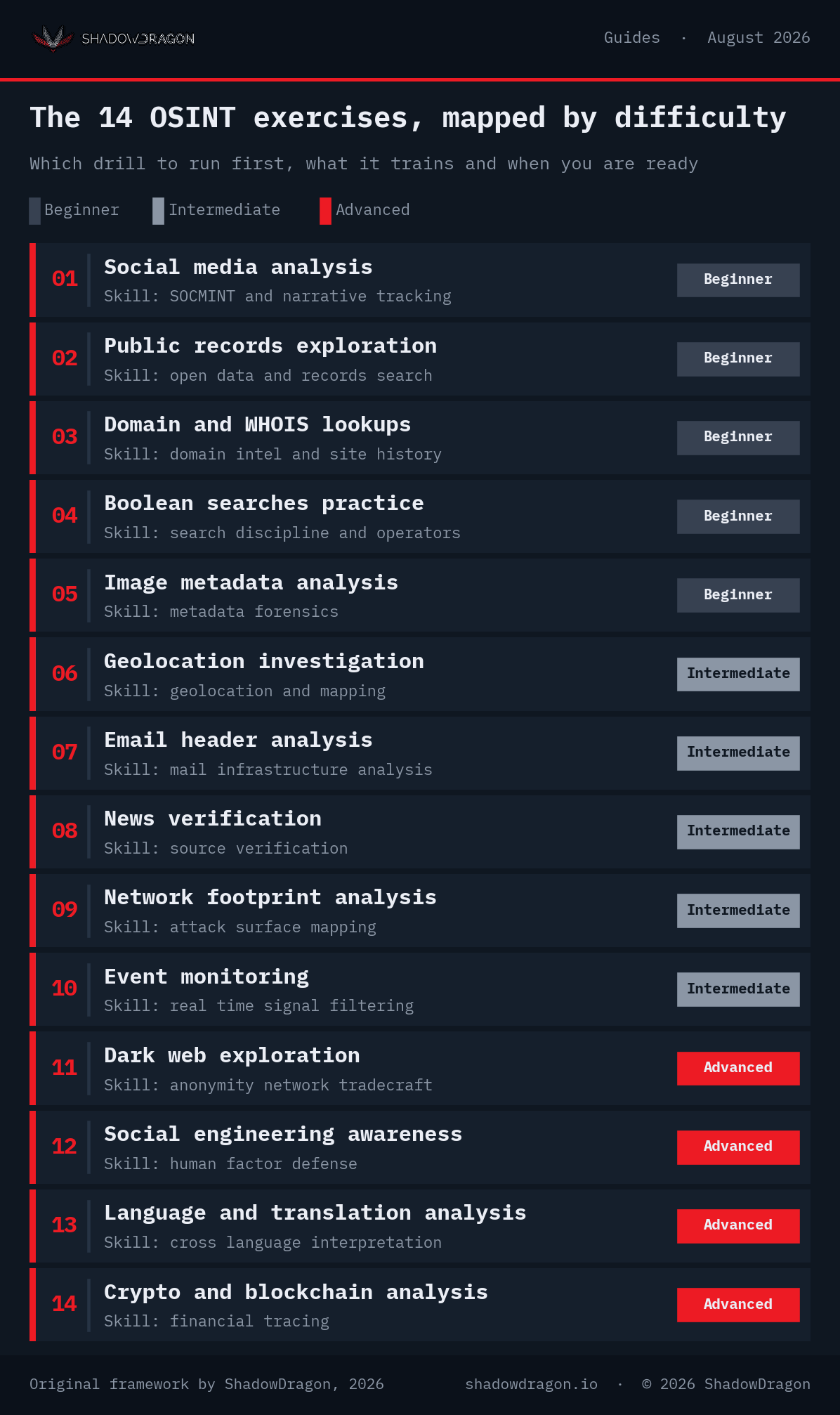
OSINT is a disciplined practice that requires a targeted, deliberate, and analytical approach. The best OSINT practitioners develop a set of core skills that turn raw data into actionable insight. Here’s a breakdown of what matters most.
Research and information gathering
The backbone of any OSINT operation is the ability to hunt, intentionally and methodically. Skilled OSINT investigators know how to pull data from both the obvious and the obscure.
Commonly used sources include social media feeds, news archives, court records, open forums, and breach databases.
Commonly used tools include:
Critical thinking and analysis
Finding information isn’t the hard part. Anyone can do a quick search. The real challenge is making sense of what you find. OSINT isn’t just about grabbing facts; it’s about thinking clearly, asking smart questions, and noticing when something feels off.
You need a sharp eye to catch bias, call out propaganda and disinformation, and decide what’s actually worth paying attention to. The goal isn’t just to gather data, but to see through the noise and get to what really matters.
Commonly used tools include:
Data verification and validation
Verifying information is a critical part of any investigation. Just because something’s online doesn’t mean it’s real. A photo, video, or social media post might look legit but could actually be doctored, misleading, or presented completely out of context.
Skilled investigators check metadata, compare visuals across different sources, and use forensic tools to spot anything suspicious. That can involve checking when a file was created, where it came from, or whether it’s been edited along the way.
Commonly used tools include:
Social media intelligence (SOCMINT)
Social media platforms can be goldmines, but only if you know where to dig. SOCMINT specialists track usernames, decode activity patterns, and map interactions across accounts. Keep in mind that the internet is forever. What’s deleted isn’t necessarily gone.
Typical responsibilities involve assessing profile behavior, monitoring influence, and tracking mentions across platforms.
Commonly used tools include:
- Advanced search on major social media platforms
- Reverse image search to detect duplicate or sockpuppet accounts
- ShadowDragon® SocialNet®
Geolocation and mapping
Geolocation and mapping involve reconstructing context from visual clues in photos and videos. Shadows, terrain, and architectural features can all help determine where, and sometimes when, an image was captured.
Key activities often involve pinpointing locations, matching imagery to geographic features, and estimating the time an image or video was taken.
Commonly used tools include:
Technical proficiency
Knowing how to use the many tools at your disposal effectively is a critical skill for OSINT investigators. OSINT work often involves network graphing, metadata analysis, and sometimes automating repetitive tasks through scripts.
Investigators often extract metadata, automate searches, and filter large volumes of data to isolate relevant information.
Commonly used tools include:
Digital footprint analysis
People leave trails of breadcrumbs such as usernames, old email addresses, and profile pictures reused across sites. Digital footprint analysis connects those dots to reveal identity and behavior over time. By correlating aliases across sites, investigators can uncover compromised accounts, verify exposure through services like Have I Been Pwned and map user activity to build a clearer, more complete picture of an individual’s online presence.
Investigators link aliases across platforms, uncover compromised accounts, and map user activity to build a clearer picture of identity and behavior over time.
Commonly used tools include:
Open data and public records search
Some of the most valuable intel is buried in public view. Government filings, corporate disclosures, and court documents are all rich sources of information if you know how to parse them.
Investigators navigate databases, extract case details, and build timelines to support their findings.
Commonly used tools include:
Network and relationship mapping
Connections matter. Understanding who’s linked to whom (and how) can surface a wealth of hidden information behind public-facing personas.
By visualizing these relationships, investigators can highlight key influencers and detect anomalies or hidden links within a network.
Commonly used tools include:
Communication and reporting
An investigation is a wasted effort if the findings don’t make sense to the people looking for answers. Investigators build reports, charts, and presentations to turn complex data into clear, useful findings. That requires breaking down technical details, highlighting what really matters, and using visuals to help tell the story.
Commonly used tools include:
Adaptability and continuous learning
OSINT is constantly evolving as technology advances and trends change. Tools are updated, platforms change, and new OSINT techniques emerge all the time. Investigators need to follow updates, stay active in the community, and experiment with new methods through hands-on practice and challenges to stay on top of their game.
Commonly used resources include:
Time management and organization
The scope of investigations can expand quickly, and effective OSINT work requires a high level of organization. Investigators must keep data structured and accessible by categorizing information, managing leads efficiently, and maintaining focus on the most relevant threads.
Commonly used tools include:
Problem-solving and creativity
Not every answer is obvious. Sometimes you have to piece things together from different sources to see the full picture.
Say someone shares a photo in a social media post from a café. If you spot a geotagged photo taken nearby around the same time, you can connect the dots and place that person in a specific location at a specific moment.
Attention to detail
Attention to detail is critical in OSINT. A small element in an image, like a reflection or file name, can provide key information such as a location or time. Overlooking these details can lead to incomplete or inaccurate conclusions.
For example, you might spot the serial number on a laptop reflection in a photo and link it to an eBay listing.
 Nico Dekens – aka “Dutch OSINT Guy”