Your ideal stack of tools and resources will depend on the question you’re trying to answer, your required turnaround time on each investigation, and the volume of data you’re working with. Start with your investigative needs then work into tooling.
1. Start with the type of investigation
Ask yourself what your end goal is. A fraud investigator tracking down accounts? An intelligence analyst looking to map out a network? A journalist fact-checking a source? Each vertical is ultimately looking to answer unique questions.
- Fraud / threat intelligence: You’ll want tools that help link identities, reveal hidden relationships, and surface risk indicators across accounts and platforms.
- Corporate due diligence: This may require looking into corporate records, ownership, litigation history, etc.
- Law enforcement: Depending on your department you may care more about certain platforms that allow you to work with larger data sets, have auditability, easy evidence handling, etc.
- Journalism / research: Source discovery, archival content, and verification will be more important to you.
Investing in resources and tools that aren’t made to help you answer your specific questions will leave you frustrated.
2. Match your question to the type of data
Different tools are optimized for finding different types of data. If you know what kind of information you want to find before you start searching, you can save yourself a lot of time. Otherwise, you may end up with more manual efforts, jumping between different tools and entering countless search queries.
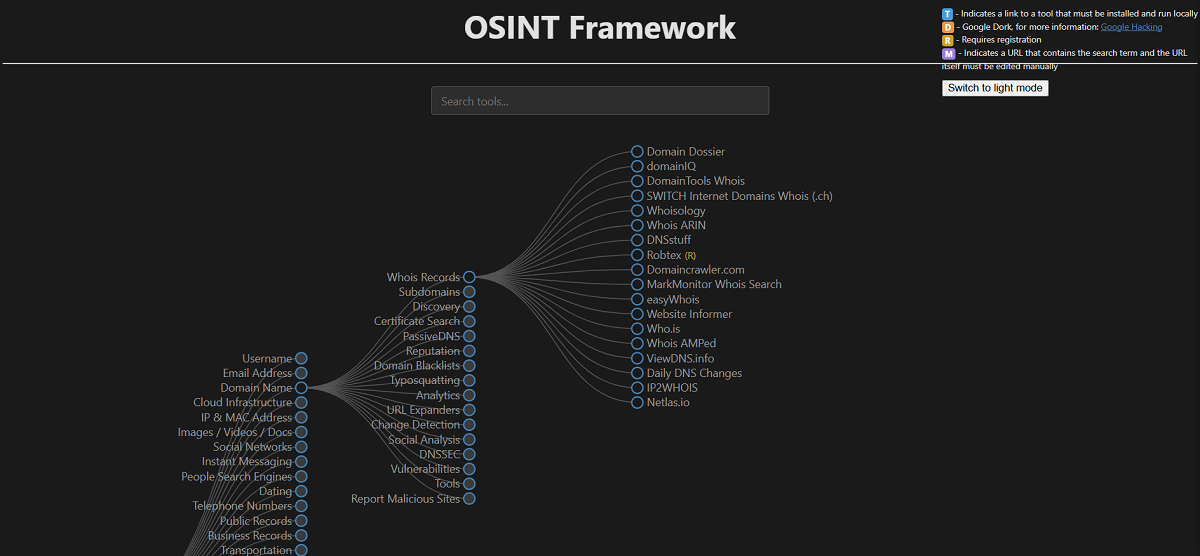
- Person-centric data: social profiles, usernames, phone numbers, email addresses, physical addresses
- Corporate data: Business filings, subsidiaries, and executive relationships
- Geolocation data: Maps, satellite images, location metadata
- Leaks / breaches: Past exposures, historical datasets
- Content / media: Photos, videos, captured webpages
3. Understand your scale: manual versus automated research
Are you doing a one-time search? Monitoring contacts over time?
Manual lookup tools can suit ad-hoc searches, checking data you already suspect to be valid, or doing one-off investigations.
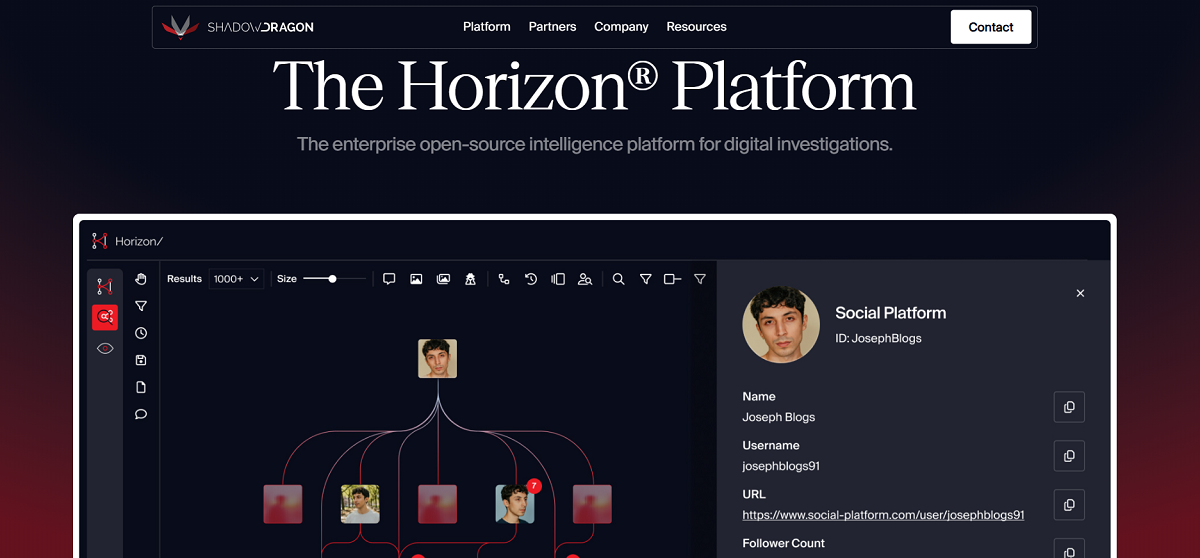
Automated platforms are best suited for complex investigations, monitoring contacts or companies over time, visualizing relationships, or repeating a particular workflow on a regular basis.
If you’re doing ongoing investigations or continuous monitoring, you’ll find benefit from a tool that can automate tasks.
4. Be realistic about your skill level
Some resources cater to analysts who know how to write queries, and aren’t afraid of messy data. Others are designed to walk you through the process.
- Gaining experience? Look for tools with guided searches and easily digestible outputs.
- Seasoned analyst? You’ll want a tool that allows you to pivot between data types and perform entity resolution.
Just because a tool has more functionality doesn’t mean it is necessarily useful. Every extra button increases the chance you may be led to an incorrect conclusion.
5. Budget what you can afford
Free tools are a great gateway into OSINT, but can come with limitations, such as API rate limits, partial datasets, or manual workflows.
Freemium resources are fantastic entry points if you’re building experience with OSINT. They’re also ideal for one-off investigations or information verification.
With paid licenses, you’ll have access to better coverage, faster results, and can automate the boring stuff. If you’re using OSINT software as part of your regular workflow, a paid tool will almost always make your life better.
 Nico Dekens – aka “Dutch OSINT Guy”